

NORMACOR® is a cardioplegic agent for blood cardioplegia, a set of two solutions for myocardial protection during cardiac surgery.
Registration number
LP-No.(015032)-(RG-RU)
Trade name
NORMACOR®
INN
potassium chloride + magnesium sulfate + mannitol
Dosage form
set of solutions for cardioplegia
Description
transparent colorless liquid
Pharmacotherapeutic group
cardioplegic agent
ATX code
B05XA16
pH
7,6–8,0
The drug NORMACOR® is a set of two solutions:
Solution No. 1 (high potassium) - to achieve rapid asystole
Solution No. 2 (low potassium) - to maintain asystole
The drug prolongs myocardial resistance to hypoxia, reducing its energy consumption, and provides protection against ischemic and reperfusion injury under conditions of normothermia or moderate hypothermia
Components
Potassium ions reduce myocardial excitability and conductivity
Magnesium ions are involved in neuromuscular excitation
Mannitol has an anti-edematous, diuretic effect
Trometamol - eliminates acidemia and intracellular acidosis
Cardiac surgeries:
in patients with preserved and reduced contractility of the heart
in chronic cardiac dysfunction, severe damage to the coronary bed and myocardium
in urgent or emergency interventions due to unstable angina or acute myocardial infarction
in case of emergency transition to IR during minimally invasive surgery
Contraindications
Individual intolerance to components
Efficacy and safety in children under 18 years of age have not been established
The solution NORMACOR® is not used for injections or infusions (except for cardioplegia).
Use during pregnancy and lactation
No studies have been conducted. Use is only possible if the benefit to the mother outweighs the potential risk to the fetus and child
Auxiliary equipment
perfusion set for blood cardioplegia;
cardioplegic cannulas (Ø 2.5–6 mm);
tube clamps;
Cardioplegic ICU attachment with two roller pumps.
Temperature regime: normothermia (36–37 °C) or moderate hypothermia (30–35 °C).
Routes of administration: antegrade (through the aortic root), retrograde (through the coronary sinus), or mixed.
Routes of administration: antegrade (through the aortic root), retrograde (through the coronary sinus), or mixed.
Cardioplegia administration scheme
Doses · Achieving asystole
Immediately after clamping the aorta, perfusion of a mixture of Solution No. 1 with oxygenated blood in a ratio of 1:2, rate 300 ml/min.
Asystole occurs within 1–2 minutes.
After reaching asystole, administer the remaining volume up to 400 ml, reducing the rate to 250 ml/min.
If asystole is absent within 3 minutes, increase the rate to 350 ml/min, if necessary, add an additional container of Solution No. 1.
If asystole is absent within 5 minutes, switch to retrograde delivery (100 ml/min, pressure no more than 50 mmHg).
Maintenance of asystole
It is carried out in one of three equivalent ways:
1
With the heart stopped, perfuse with a mixture of Solution No. 2 and oxygenated blood in a 1:4 ratio at a rate of 150 ml/min antegrade or 100 ml/min retrograde, with repeated interruptions of 15 minutes and resumption of 2–3 minutes between intervals. The pressure during retrograde administration should not exceed 50 mmHg. Upon resumption of ventricular activity, switch to a 1:2 mixture of Solution No. 1 and blood until asystole is achieved.
2
Upon resumption of ventricular activity, perfuse a mixture of Solution No. 1 and oxygenated blood in a 1:2 ratio (antegrade at 150 ml/min or retrograde at 100 ml/min) only if ventricular activity is observed until stable asystole is achieved. The pressure during retrograde administration should not exceed 50 mmHg.
3
If signs of resumption of ventricular activity appear, perfuse with a 1:2 mixture of Solution No. 1 and blood for 2–3 minutes (possibly multiple times) to prevent resumption of ventricular activity. The pressure during retrograde administration should not exceed 50 mmHg.
End of cardioplegia: perfusion is stopped and the clamp is removed from the aorta
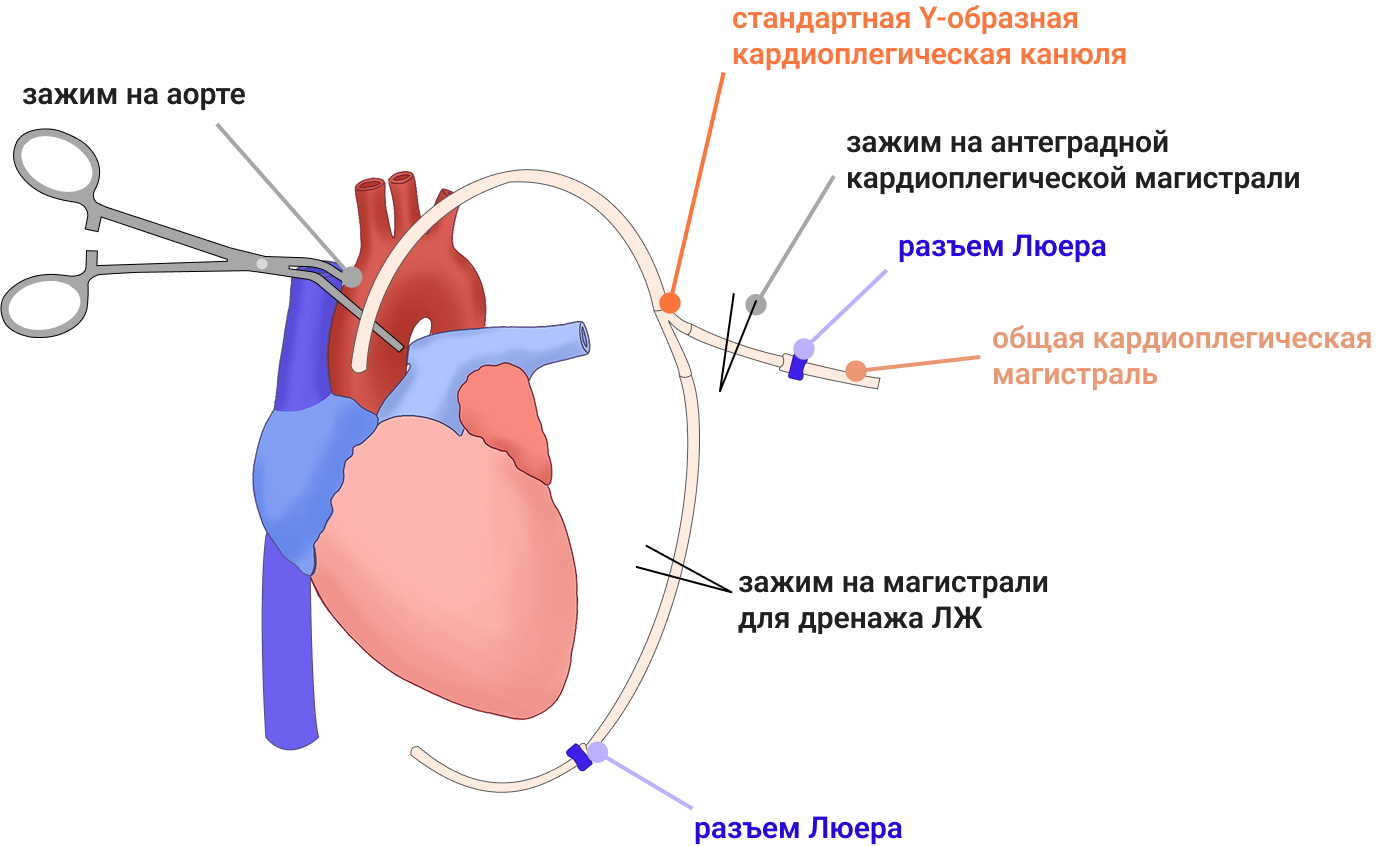
Антеградная кардиоплегия
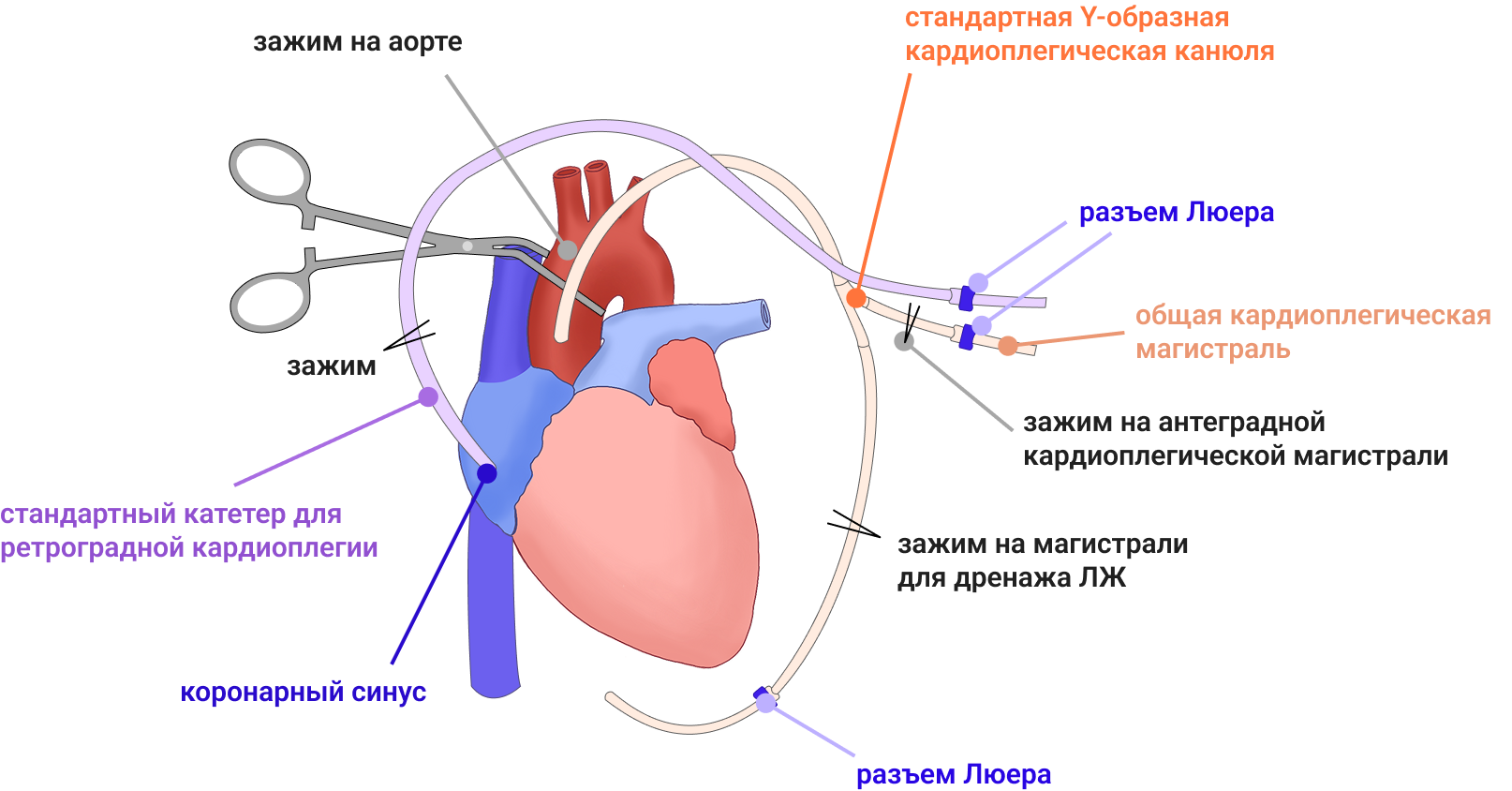
Ретроградная кардиоплегия
Side effects
Allergic reactions are possible. No adverse reactions were identified in clinical trials
Overdose
Hyperkalemia (a longer rhythm recovery after aortic clamp removal) is possible. This resolves spontaneously with the Mannitol contained in the medication. No additional treatment is required.
Interaction with other drugs
None. Mannitol may accelerate the elimination of other drugs
Release form
A set of solutions in glass bottles (250 ml or 450 ml) or polymer containers (200 ml or 400 ml). Solution No. 1 and Solution No. 2 are packed in a cardboard box.
Storage conditions
Protect from light, at a temperature not exceeding 25°C. Keep out of reach of children. Expiration date: 3 years. Do not use after the expiration date.
Conditions of dispensation: for hospitals.
Owner of RU
JSC CardioSystemPharma (JSC KSF)
141401, Moscow Region, Khimki, Khimki, Rabochaya St., 2A, building 1, floor 5, office 93
Tel.: 8 (495) 925-30-74 · www.normacor.ru
Acceptance of claims
LLC "iPharma"
121205, Moscow, Skolkovo Innovation Center area, Bolshoy blvd, 40
Manufacturer (all stages)
MOSFARM LLC
141342, Moscow Region, Sergiev Posad District, Bogorodskoye settlement, building 63

JSC "CARDIOSYSTEMPHARMA"
Owner LP-No.(015032)-(RG-RU)
Owner LP-No.(015032)-(RG-RU)
2a-1, Rabochaya, St. Khimki, Moscow Region, 141401 Russia
© 2026 АО «КардиоСистемФарма». Все права защищены.

Мы используем куки для работы сайта